When it comes to creating stunning designs, whether on clothing, accessories, or home décor, choosing the right rhinestone size is crucial for achieving the perfect look. Rhinestones add elegance and sparkle, but selecting the wrong size can overwhelm or underplay your design. Understanding size charts ensures balance, functionality, and aesthetic harmony.
Rhinestone Size Chart
| Size Code | SS (Stone Size) | MM (Millimeter) | Approx. Stones Per Gross |
|---|---|---|---|
| SS4 | 1.5-1.7 mm | Very Small | 144 |
| SS6 | 1.9-2.0 mm | Small | 144 |
| SS8 | 2.3-2.5 mm | Small-Medium | 144 |
| SS10 | 2.7-2.9 mm | Medium | 144 |
| SS12 | 3.0-3.2 mm | Medium-Large | 144 |
| SS16 | 3.8-4.0 mm | Large | 144 |
| SS20 | 4.6-4.8 mm | Extra Large | 144 |
| SS30 | 6.3-6.5 mm | Very Large | 144 |
| SS34 | 7.1-7.3 mm | Extremely Large | 14 |
Understanding Rhinestone Sizes
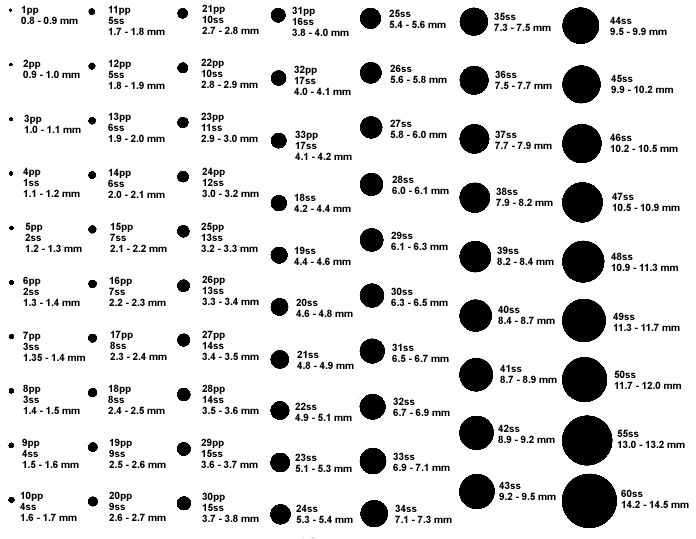
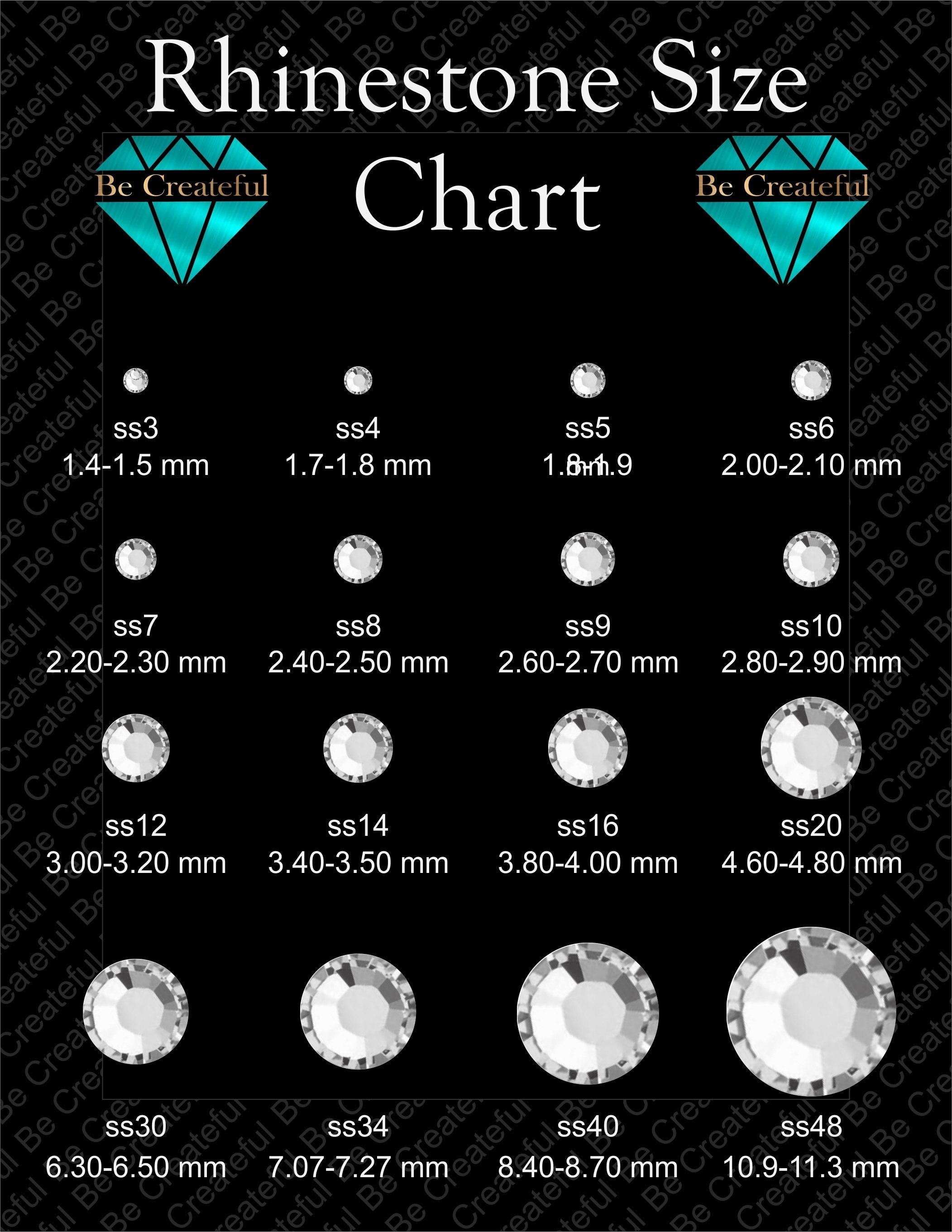
Rhinestones are measured using the “SS” system, short for “Stone Size,” which can sometimes be confusing for beginners. This system translates rhinestone sizes into millimeter measurements, helping crafters and designers choose the right fit for their projects. For example, an SS10 rhinestone is approximately 2.8 millimeters in diameter, while an SS20 measures about 4.8 millimeters.
Smaller sizes, such as SS6 or SS8, are perfect for delicate details like nail art or intricate embroidery. Larger sizes, such as SS30 or above, create bold, eye-catching designs on apparel or décor. However, selecting a size requires careful consideration. While larger stones stand out, they may overshadow subtle designs, and smaller ones can become lost on larger surfaces.
By understanding the SS sizing system and its practical applications, you can make informed choices that balance visual impact and functionality. Knowing the typical uses for each size ensures your designs remain cohesive and purposeful, enhancing the overall aesthetic of your project.
Credit: rainbowsoflight.com
How to Choose the Right Rhinestone Size for Your Project
The perfect rhinestone size depends on your project’s design, purpose, and the material you’re working with. First, consider the type of project—whether it’s clothing, nail art, or tumblers—because each requires a different approach.
For instance, clothing designs often benefit from medium-sized rhinestones (SS10 or SS12) that are large enough to catch the eye without overwhelming the fabric. In contrast, nail art typically calls for smaller stones, such as SS4 or SS6, which fit well on the small, delicate surface of a nail.
Next, think about the desired effect. Do you want subtle shimmer or bold sparkle? Larger rhinestones create a striking, noticeable effect, while smaller stones offer a more refined, understated shine. However, balancing the sizes can be tricky:
larger stones can dominate the design, while too many tiny stones might lose their sparkle. Additionally, consider the material you’re working with. For example, a soft fabric may require smaller stones to avoid discomfort, whereas a hard surface like glass can support larger, more dramatic rhinestones.
Ultimately, choosing the right size requires a careful balancing act. It’s essential to experiment and adjust based on the specific needs of your project, ensuring that your rhinestones enhance, rather than overpower, the overall design.
Credit: becreateful.com
Common Mistakes to Avoid When Choosing Rhinestone Sizes
Even seasoned designers can make size selection mistakes that impact the final result of their projects. One common error is choosing rhinestones that are too small for the design. While smaller stones can create delicate details, they can easily get lost on larger surfaces or fabrics, making the design appear flat or lacking in impact.
On the other hand, opting for rhinestones that are too large can overwhelm a project, especially when working with delicate materials or intricate patterns. Larger stones may clash with finer designs, leaving them looking cluttered or unbalanced.
To avoid these mistakes, it’s important to assess the material and size of the area you’re decorating. For fabric projects, medium-sized stones (like SS10 or SS12) often strike the perfect balance, while larger stones (SS20 and above) work best for bold, statement pieces. If you’re working on smaller items, such as nail art or jewelry, smaller stones (SS4 or SS6) offer precision without losing their sparkle.
Additionally, it’s vital to test out different sizes before committing to the full design. Lay out a few stones to see how they look on your project, and adjust accordingly. By carefully considering the impact of your rhinestone size choices, you can ensure that your designs are not only visually striking but also well-suited to the materials you’re working with.
Conclusion
Understanding the right rhinestone sizes is crucial for your projects. Ensure proper sizing for optimal results. Refer to the rhinestone size chart as a valuable guide. Selecting the appropriate size will enhance the beauty and impact of your designs. Make informed decisions for stunning outcomes in your creations.
FAQs
How do I convert rhinestone SS sizes to millimeters?
Answer: Rhinestone sizes are measured using the “SS” system, where each number corresponds to a specific diameter in millimeters. For example, an SS6 rhinestone is approximately 2 millimeters, SS10 is about 2.8 millimeters, and SS30 is roughly 6 millimeters. To convert an SS size to millimeters, you can refer to a rhinestone size chart, which will show the exact diameter for each SS number.
What is the most commonly used rhinestone size for clothing projects?
Answer: For clothing projects, medium-sized rhinestones like SS10 or SS12 are most commonly used. These sizes are large enough to catch the eye and add sparkle but not so large that they overpower the design. They work well on fabrics like t-shirts, dresses, and accessories, where you want a noticeable yet balanced effect.
Can I mix different rhinestone sizes in a single design?
Answer: Yes, mixing rhinestone sizes is a popular technique to add depth and dimension to your design. Smaller rhinestones (SS6 or SS8) can fill in details or create subtle accents, while larger stones (SS20 or SS30) can serve as focal points. The key is to maintain balance—too many large rhinestones may dominate the design, while too many small ones may lack impact. Experiment with various combinations to find the perfect mix for your project.