Choosing the right spring size for your garage door is crucial for its functionality, safety, and longevity. Springs balance the door’s weight, ensuring smooth operation. This guide will explain measurements, charts, and tips. Understanding these factors helps you avoid mistakes, balance cost and durability, and make informed, safe decisions.
Garage Door Spring Size Chart
| Garage Door Weight | Spring Size |
|---|---|
| 100-150 lbs | 0.225” x 1.75” x 23” |
| 150-175 lbs | 0.25” x 2” x 25” |
| 175-200 lbs | 0.262” x 2” x 26” |
| 200-225 lbs | 0.273” x 2” x 28” |
| 225-250 lbs | 0.273” x 2” x 32” |
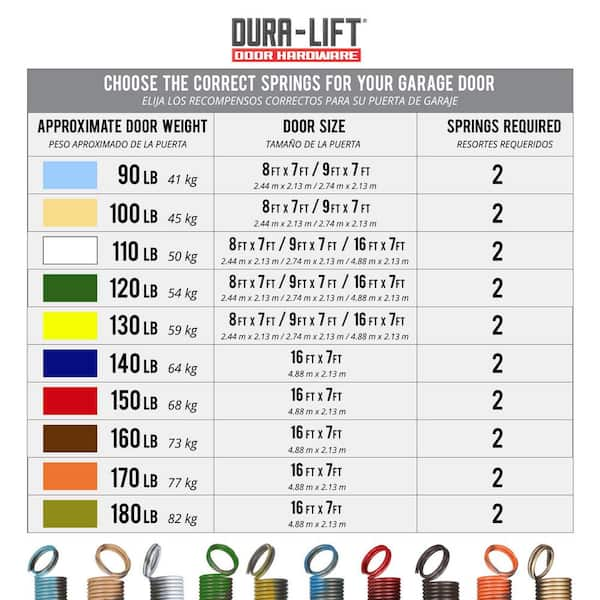
Credit: www.homedepot.com
Understanding Garage Door Spring Types
Before diving into sizes, it’s important to understand the two main types of garage door springs: torsion and extension.
Torsion springs are mounted above the garage door and work by twisting tightly to lift the door. These springs are known for their durability, smoother operation, and ability to handle heavier doors. However, they tend to cost more upfront and require professional installation, which can increase the overall expense.
On the other hand, extension springs stretch along the sides of the door to create tension and lift. They are often more affordable and easier to install, making them a popular choice for lighter garage doors. The tradeoff, however, is that they typically wear out faster and may not provide the same level of control and safety as torsion springs.
To help you choose, imagine torsion springs as the heavy-duty option for stability, while extension springs are better suited for budget-conscious, lighter applications. Recognizing these differences is key to finding the right spring type for your garage door’s specific needs.
How to Identify the Right Spring for Your Door
Matching your garage door’s specifications to the right spring requires a step-by-step approach. A proper match ensures safety, smooth operation, and longevity, but getting it right can be challenging without the correct steps. Here’s a guide to help you determine the perfect spring size:
Measure the Door’s Weight and Size
Begin by weighing your garage door. A spring’s job is to balance this weight, so accuracy is critical. For this step, you might need a bathroom scale or a specialized tool. Larger doors typically require heavier-duty springs, while smaller ones can use lighter options.
Identify the Spring Type
Determine whether your door uses torsion or extension springs. Refer to the earlier section for visual cues to identify the type. This distinction will guide your next measurements.
Measure the Spring Dimensions
Use a tape measure to find the following:
Wire diameter: Measure a few coils and divide by the number of coils.
Spring length: Measure the spring from end to end.
Inside diameter: Look for a printed value or measure directly.
These measurements are crucial for matching your spring to the size chart accurately.
Consult the Garage Door Spring Size Chart
Use the chart to cross-reference your measurements. Be sure to account for factors like door weight, size, and spring type. If your data doesn’t align perfectly, choose the closest match and verify its compatibility.
Test the Spring Fit
After selecting a spring, install it carefully. Observe how the door operates—does it lift evenly and close smoothly? If not, reevaluate the measurements or consult a professional.
Tips for Troubleshooting
Mismatched Measurements: Recheck your calculations, especially for wire diameter and length, as even small errors can cause issues.
Unclear Specifications: If the spring lacks clear markings, measure meticulously or bring it to a hardware professional for help.
Balancing Cost and Durability: A stronger spring may cost more but last longer, while a cheaper one might need replacement sooner.
FAQs
1. What happens if I use the wrong size spring for my garage door?
Using the wrong size spring can cause several issues. If the spring is too strong, it may strain the door and opener, leading to premature wear. Conversely, a spring that’s too weak won’t properly balance the door, making it difficult to lift and potentially dangerous. Always ensure your spring matches your door’s weight and size for safe and efficient operation.
2. How can I measure a spring if it’s already broken?
If your spring is broken, you can still measure each piece separately. Measure the wire diameter, coil count, and inside diameter for both halves. Then, add the lengths of the broken pieces together to get the full spring length. These measurements will help you select the correct replacement spring from the size chart.
3. Should I replace both springs if only one is broken?
Yes, it’s often recommended to replace both springs at the same time, even if only one is broken. Springs wear out over time, and if one has failed, the other is likely close to its breaking point. Replacing both ensures balanced operation and prevents additional repairs in the near future.