Finding the right shoe size for your baby can be tricky, especially with their feet growing so fast. However, understanding baby shoe sizes can simplify the process. It’s important to balance comfort, fit, and development needs. Choosing the right size helps avoid discomfort and supports healthy foot growth during this crucial stage.
Baby Shoe Size Chart
| Inches | CM | US | EU | UK | Age (Approx.) |
| 3 1/2 (3.5) | 8.9 | 1 (1C) | 16 | 0.5 | 0-3 mos. |
| 3 5/8 (3.63) | 9.2 | 2 (2C) | 17 | 1 | 3-6 mos. |
| 3 7/8 (3.88) | 9.8 | 2.5 (2.5C) | 17.5 | 1.5 | 3-6 mos. |
| 4 | 10.2 | 3 (3C) | 18 | 2 | 6-9 mos. |
| 4 1/8 (4.13) | 10.5 | 3.5 (3.5C) | 18.5 | 2.5 | 6-9 mos. |
| 4 3/8 (4.38) | 11.1 | 4 (4C) | 19 | 3 | 9-12 mos. |
| 4 1/2 (4.5) | 11.4 | 4.5 (4.5C) | 19.5 | 3.5 | 9-12 mos. |
| 4 5/8 (4.63) | 11.8 | 5 (5C) | 20 | 4 | 12-18 mos. |
| 4 7/8 (4.88) | 12.4 | 5.5 (5.5C) | 20.5 | 4.5 | 12-18 mos. |
| 5 | 12.7 | 6 (6C) | 21 | 5 | 18-24 mos. |
| 5 1/8 (5.13) | 13 | 6.5 (6.5C) | 21.5 | 5.5 | 18-24 mos. |
| 5 3/8 (5.38) | 13.7 | 7 (7C) | 22 | 6 | 24 mos. |
| 5 1/2 (5.5) | 14 | 7.5 (7.5C) | 22.5 | 6.5 | 24 mos. |
| 5 5/8 (5.63) | 14.3 | 8 (8C) | 23 | 7 | 2-3 yrs |
| 5 7/8 (5.88) | 14.9 | 8.5 (8.5C) | 23.5 | 7.5 | 2-3 yrs |
How Baby Shoe Sizes Are Measured
Baby shoe sizes are usually measured using American, European, or UK sizing systems. Understanding these different systems is crucial, as they can vary significantly. For example, US sizes tend to run larger than European sizes, which may lead to confusion when shopping internationally.
Balancing size and fit is important, as an incorrect size can cause discomfort and affect your baby’s foot development. Therefore, knowing the conversion chart and considering these factors ensures a proper fit and promotes healthy growth.
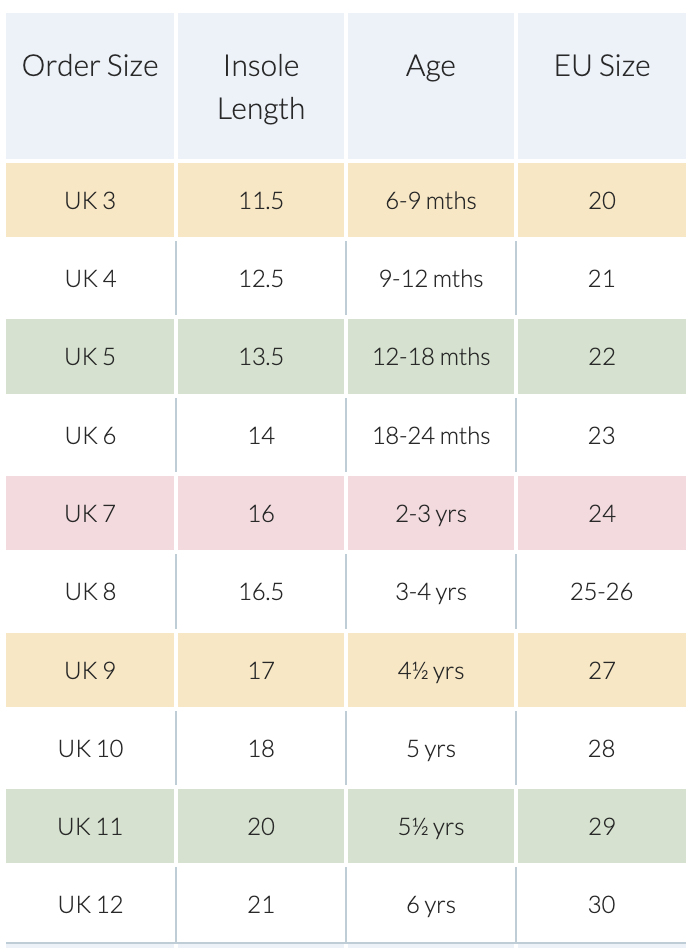
Credit: www.jojomamanbebe.com
How to Measure Your Baby’s Feet at Home
To find the best fitting shoes for your baby, measuring their feet at home is simple and can be done with just a few basic tools. Start by having your baby stand on a piece of paper, and trace the outline of their foot.
Next, use a ruler to measure the length from the heel to the tip of the longest toe. It’s important to add about 1/2 inch to this measurement for growth allowance. While this extra space ensures comfort and room for growth, be cautious—too much room can lead to discomfort or difficulty walking.
Balancing size and growth allowance is key for healthy foot development, so always measure regularly.
Factors to Consider When Choosing Baby Shoes
When selecting baby shoes, it’s not just about the size—consider factors like flexibility, material, and ease of putting on or taking off to ensure your baby’s comfort. For example, flexible shoes allow your baby’s feet to move naturally, promoting healthy development.
However, too much flexibility may not offer enough support. The material is also crucial: breathable fabrics like cotton are great for comfort, but they may not offer enough protection outdoors.
Additionally, shoes with adjustable straps or stretchy openings make it easier to put shoes on and take them off, saving time and reducing frustration. Balancing these factors is essential to support both comfort and foot growth.
How Often Should You Update Baby Shoes?
Babies grow fast, and their shoe sizes change rapidly, meaning you’ll need to check their shoes for proper fit every couple of months. As your baby’s feet grow, shoes that once fit comfortably may become too tight, leading to discomfort or restricted movement.
It’s important to monitor the fit regularly to avoid any issues. However, constantly updating shoes can be costly, so finding the right balance between size, comfort, and budget is key.
Pay attention to signs like difficulty putting shoes on, marks on their feet, or them refusing to walk, as these could indicate that it’s time for a new pair.
FAQs
How do I know if my baby’s shoes are too tight?
If your baby’s shoes are too tight, you may notice red marks or indentations on their feet after wearing them. Additionally, they might seem uncomfortable, refuse to walk, or show signs of irritation. Regularly checking the fit and ensuring there’s about 1/2 inch of extra space for growth can help avoid these issues.
Can I use adult shoe sizes to estimate my baby’s shoe size?
It’s not recommended to use adult shoe sizes to estimate your baby’s size, as baby shoe sizes are measured differently. Babies have much smaller feet, and their shoe sizes follow specific charts that vary by country. Always refer to a baby shoe size chart for accurate measurements based on your baby’s foot length.
When should I buy my baby’s first pair of shoes?
You should buy your baby’s first pair of shoes once they start walking outdoors, as shoes provide support and protection. Before that, soft socks or slippers are sufficient. It’s important not to rush the process—let your baby learn to walk barefoot or in soft shoes, as this helps with foot development.